A-Level Economics Resources
Clear, accessible resources for students studying A-Level Economics. Begin with the introductory guides below, then explore the core economic ideas that underpin the subject.
Getting Started with A-Level Economics
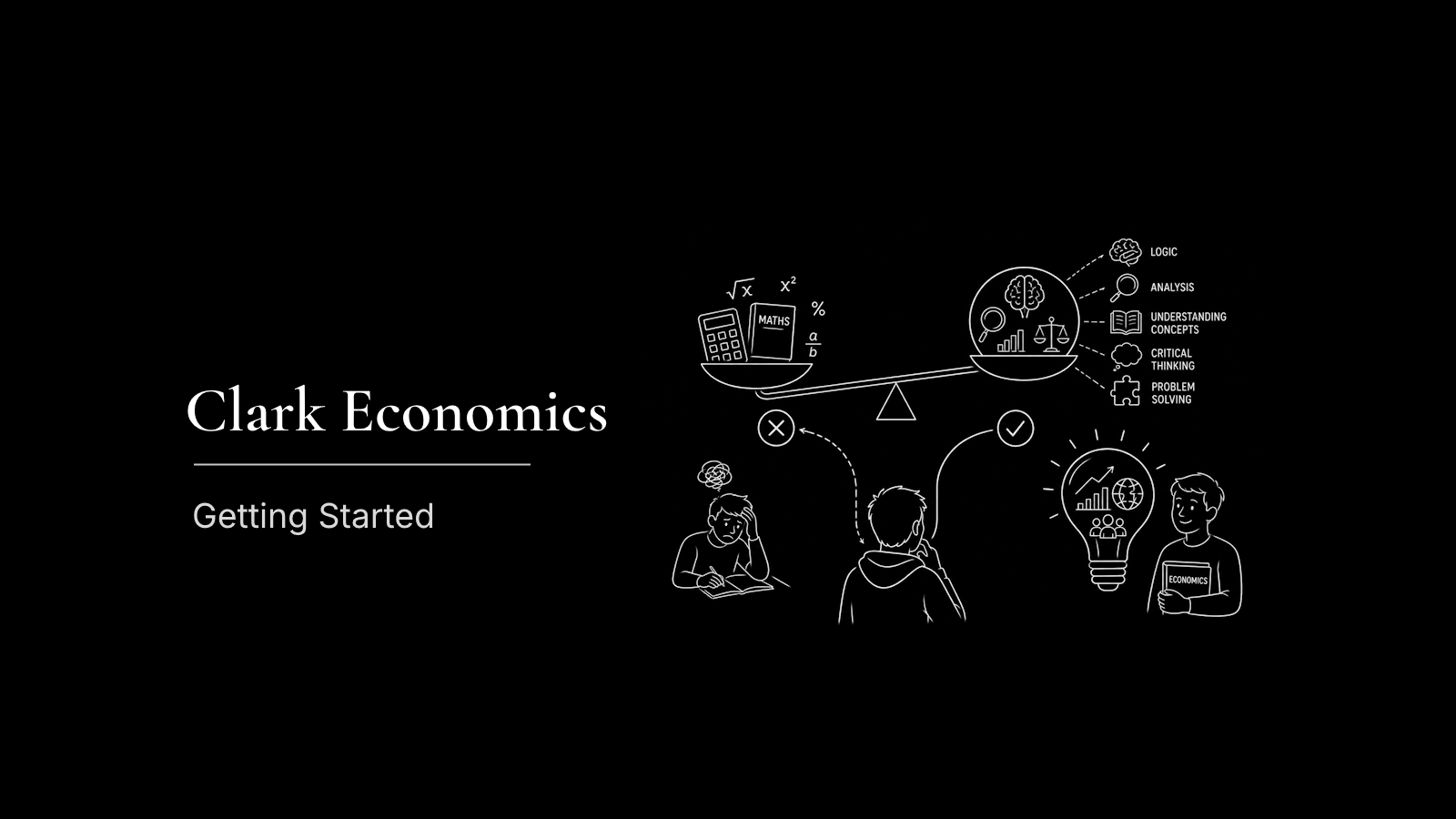
Choosing A-Level Economics or just beginning the course? These guides explain what you will study, how much maths is involved, what students often find difficult and why Economics is worth studying.
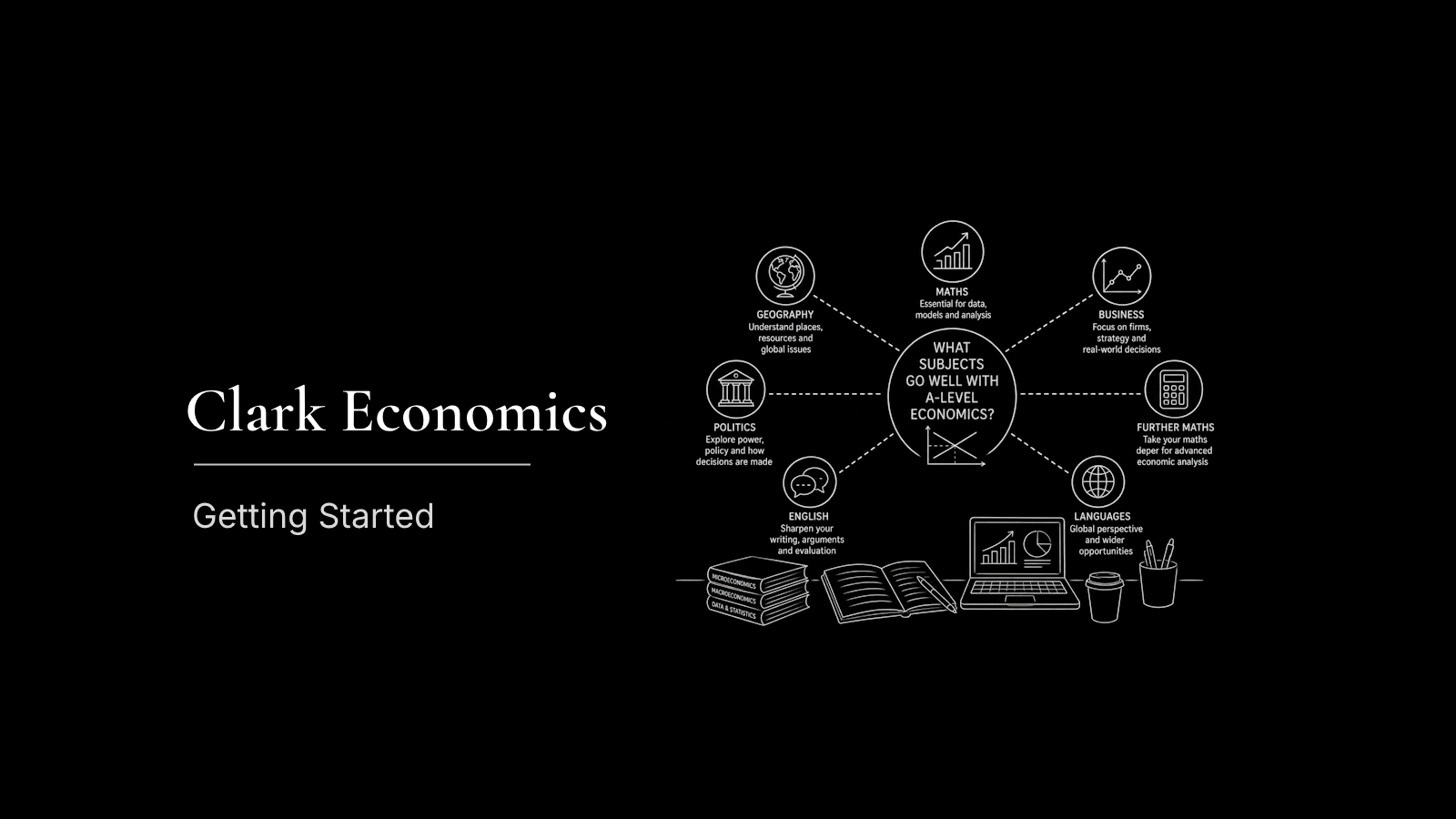
What subjects should you take alongside A-Level Economics? This guide explains which subjects combine well, when Maths matters, and why there is no single perfect A-Level combination.
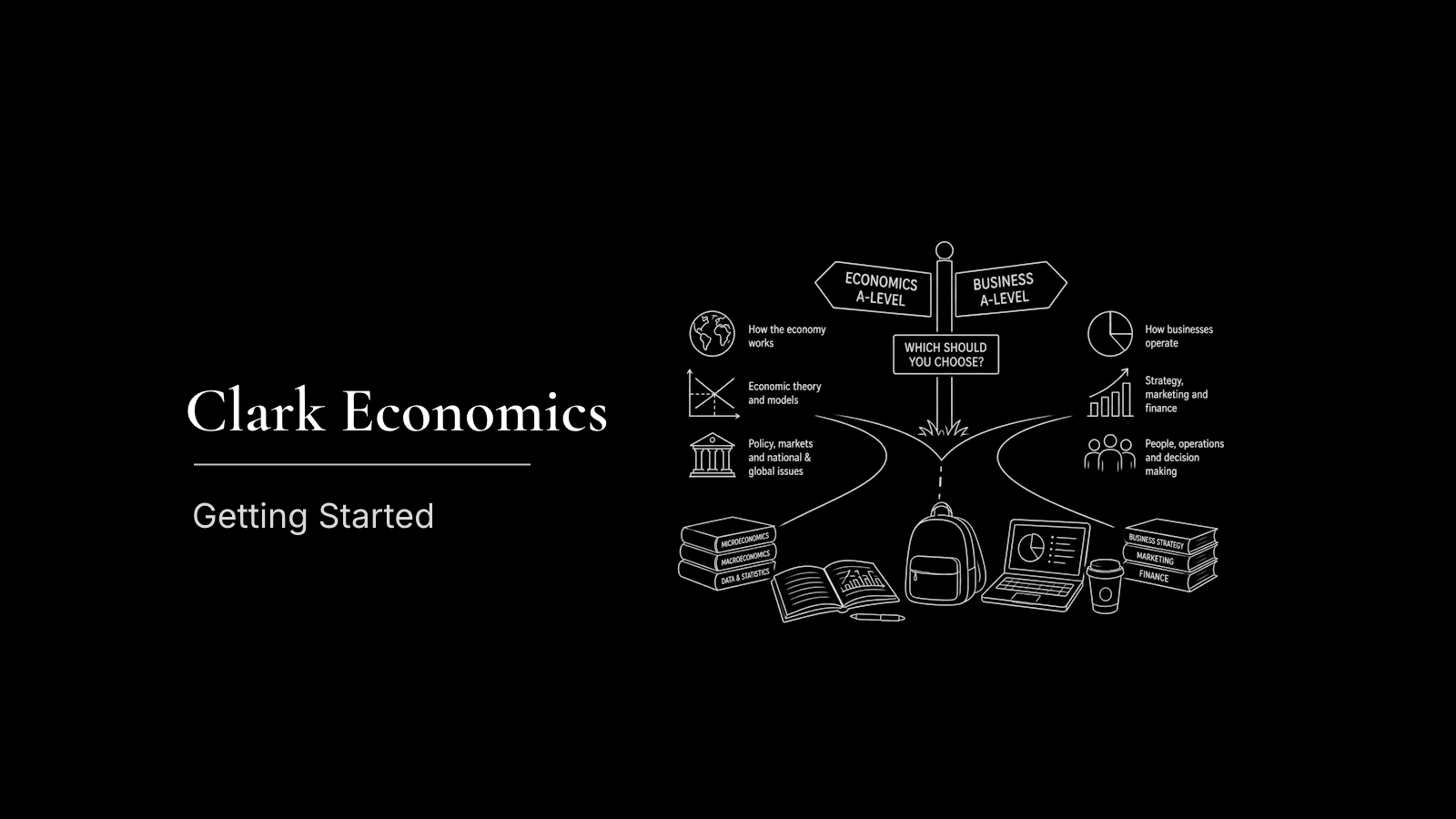
Trying to choose between A-Level Economics and Business? This guide explains the main differences in what you study, how the subjects are assessed, the maths involved and which type of thinking may suit you best.
Is A-Level Economics right for your child? This guide explains what the subject is really like, the skills students need, how much maths and writing is involved, and when Economics may — or may not — be a good choice.
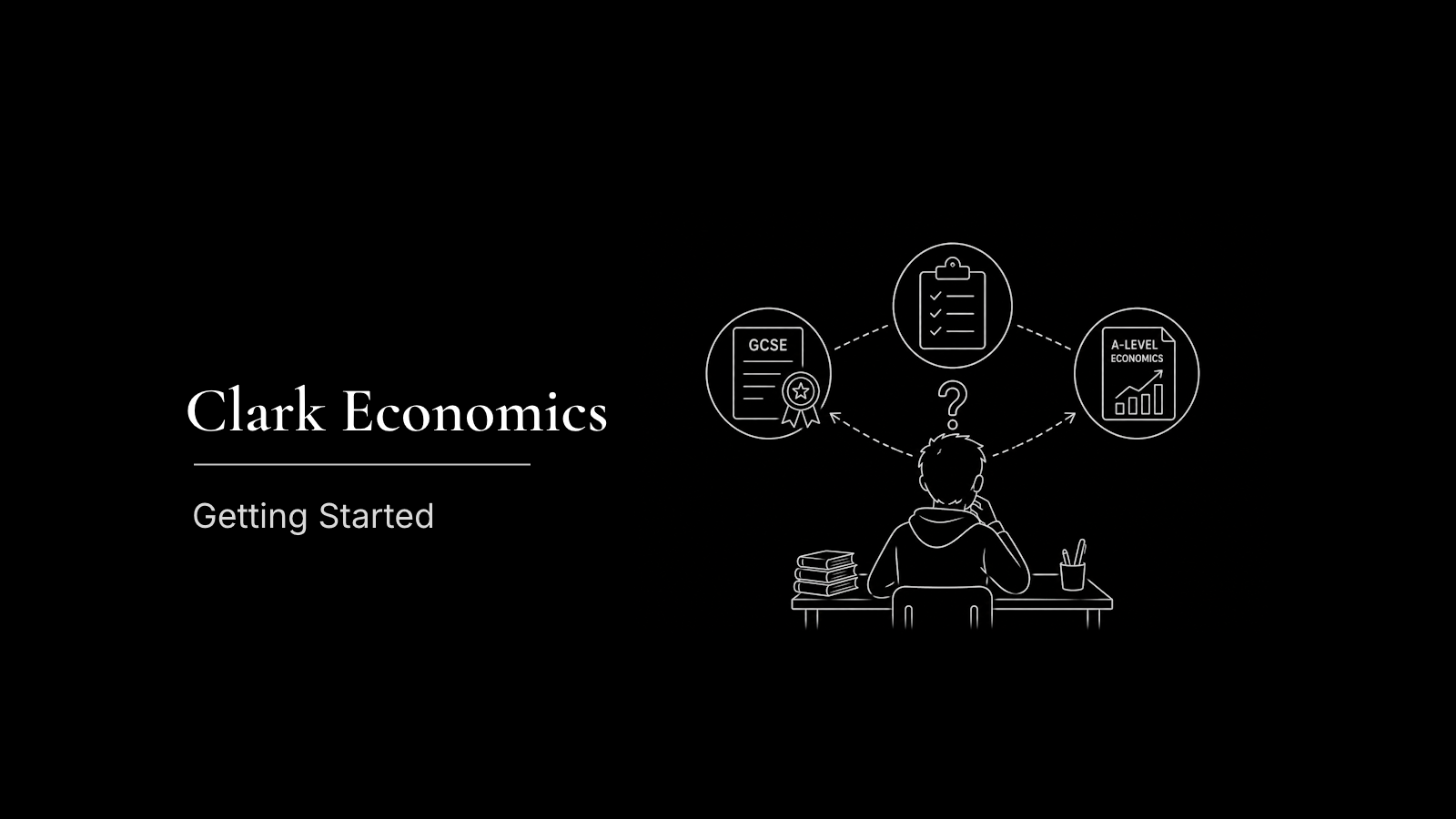
There is no single GCSE grade requirement for A-Level Economics. Schools and colleges set their own entry criteria, particularly for maths and English. Here’s what to check and what to do if your grades fall just short.
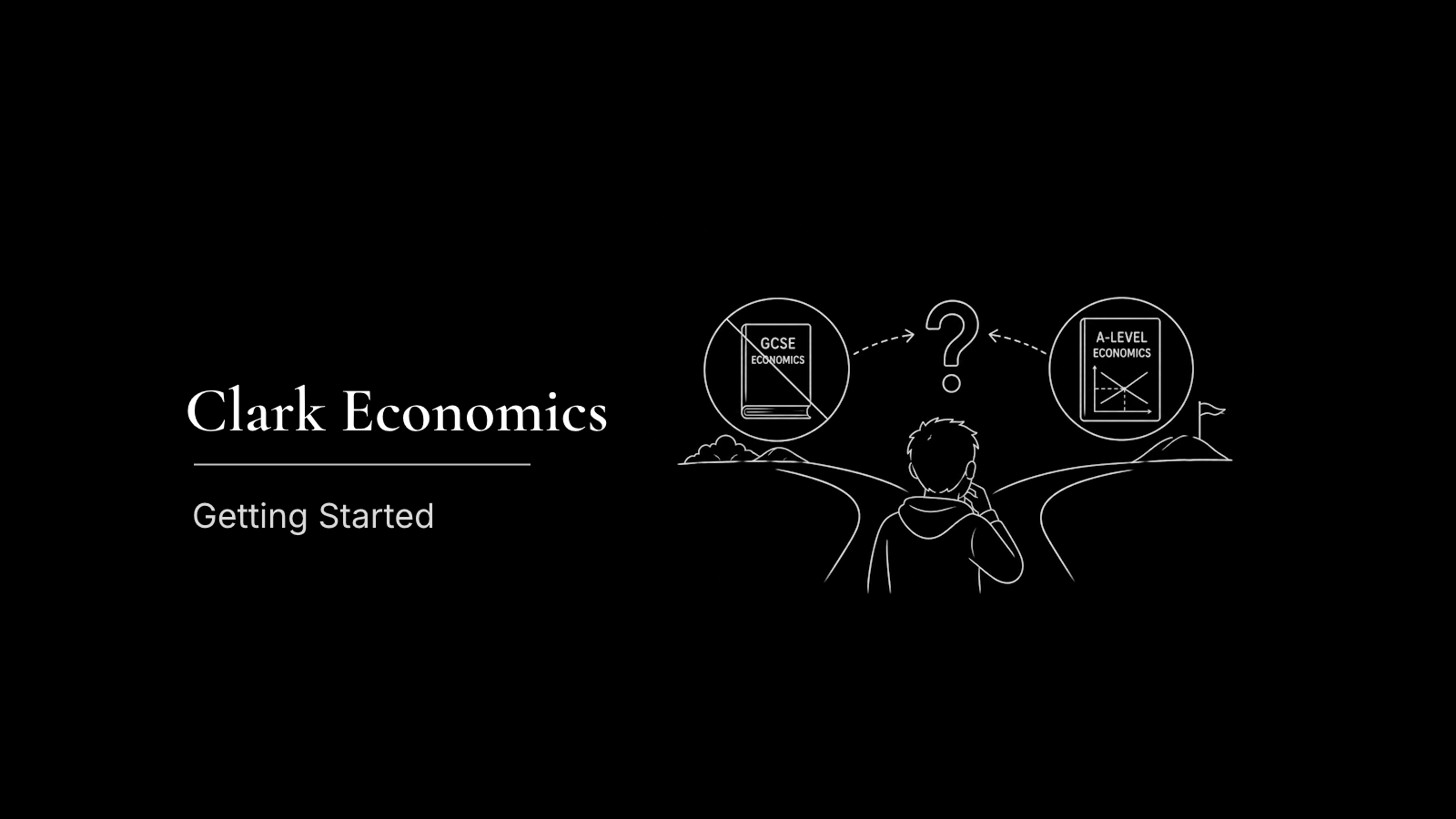
You don’t need to have studied GCSE Economics to take A-Level Economics. Find out whether students with GCSE Economics have an advantage, what skills matter most and what you can do before starting the course.
Find out what you'll study in A-Level Economics, from supply and demand to inflation and economic growth, and discover how the course helps you understand the world around you.
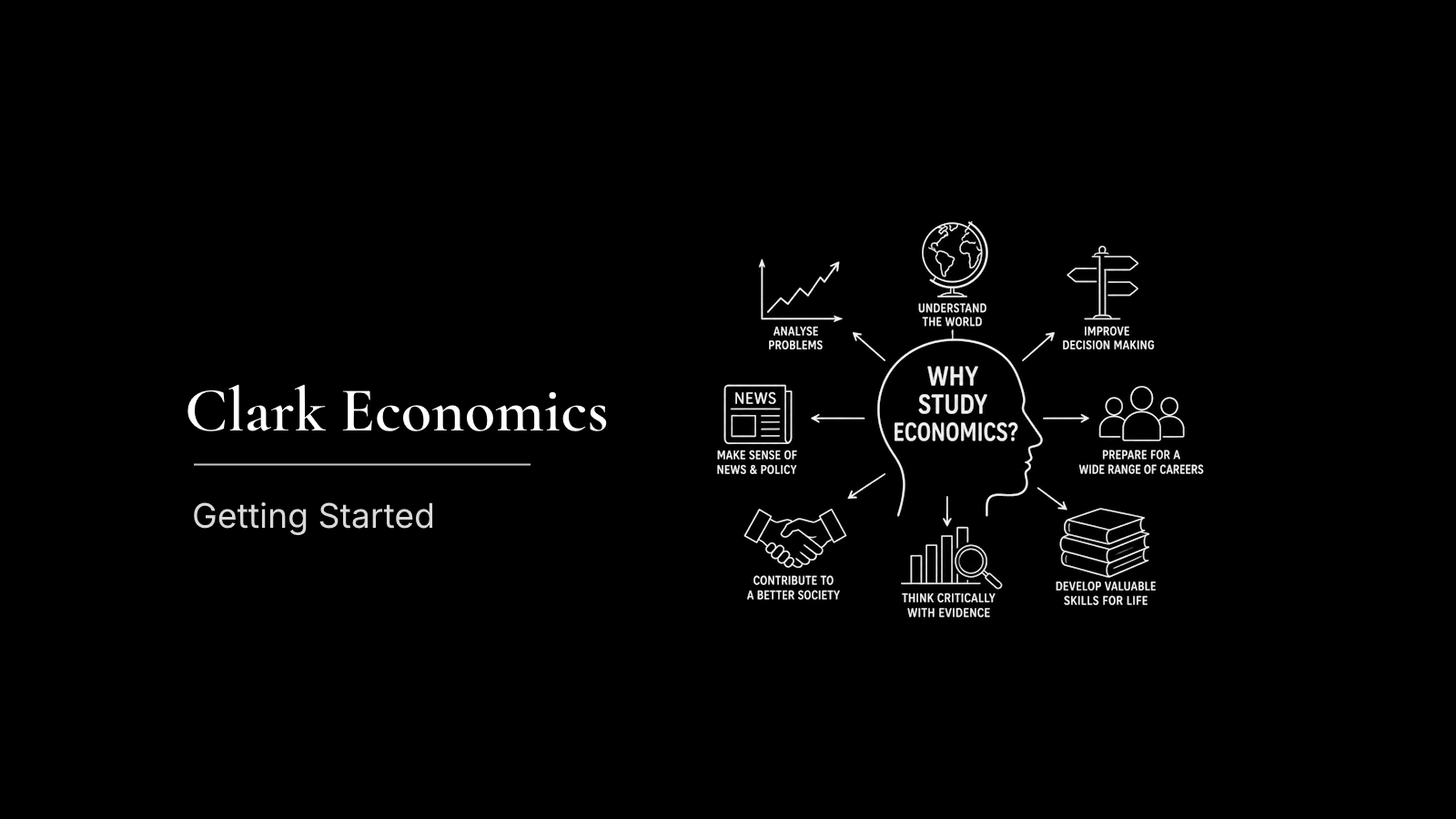
Economics is much more than money and markets. Find out why A-Level Economics is one of the most useful and interesting subjects you can study, and how it develops skills valued by universities and employers.
Many students worry that A-Level Economics will be difficult. This guide explains the real challenges, why the subject is more about understanding than memorising, and how you can build the skills needed to succeed.
Core Resources
These guides build the foundations of A-Level Economics from the ground up. Start with why Economics exists, then explore scarcity, choice, opportunity cost and the other ideas that help the subject fit together.
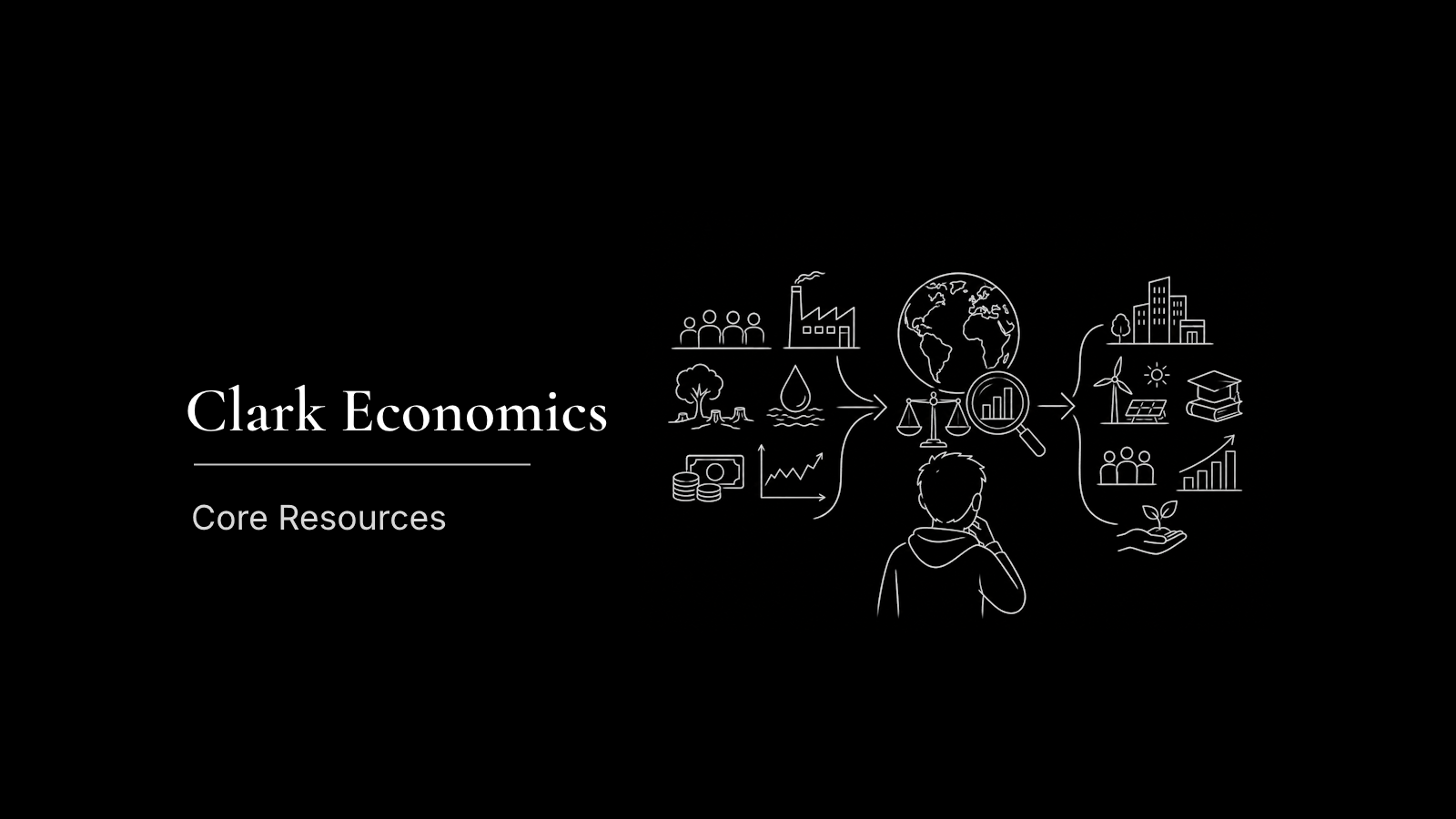
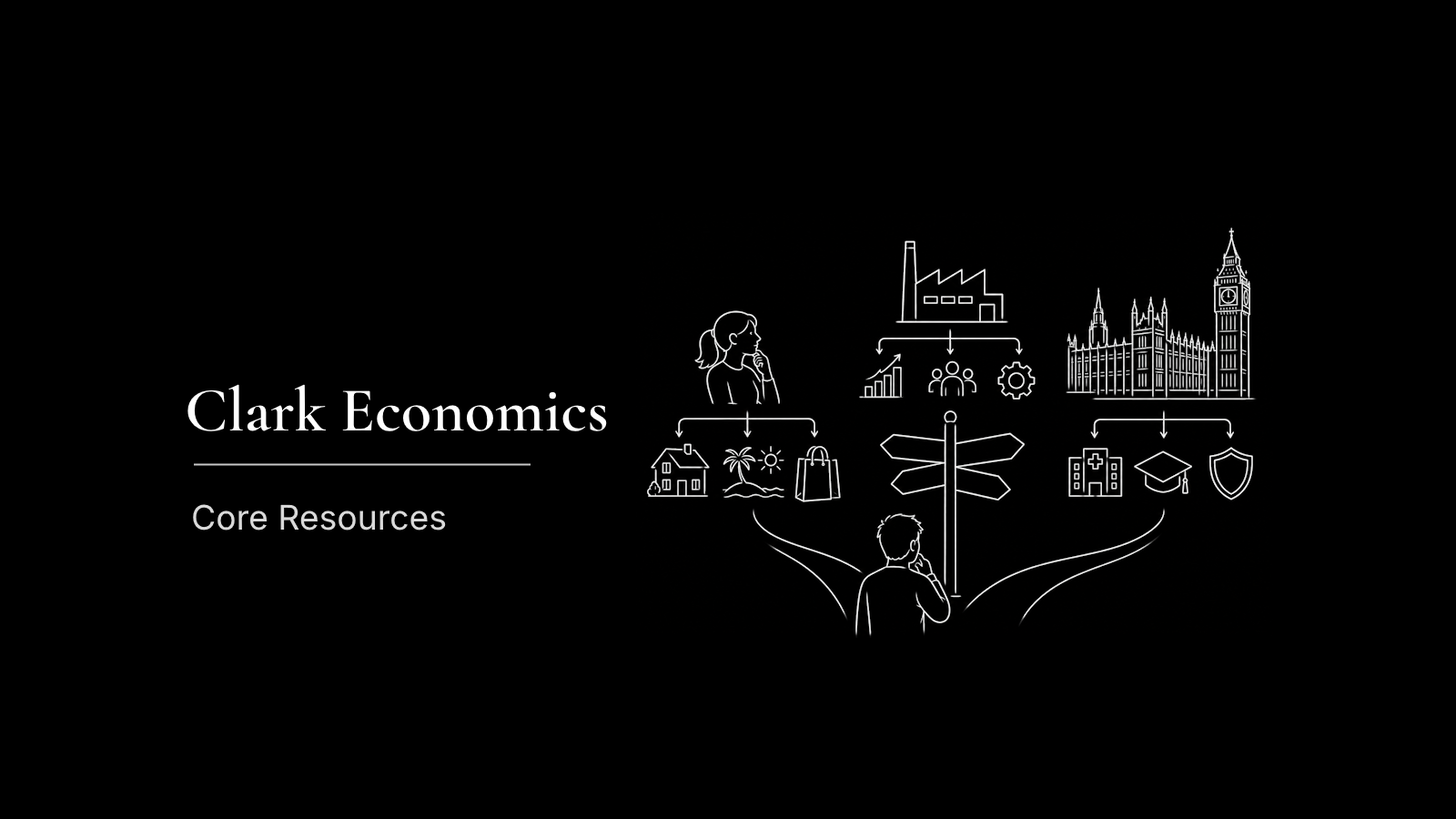
Economics can seem like an odd collection of subjects, from prices and pollution to banks, unemployment and government borrowing. This guide builds an economy from scratch to show how these topics fit together, why economics exists and what economists actually do.
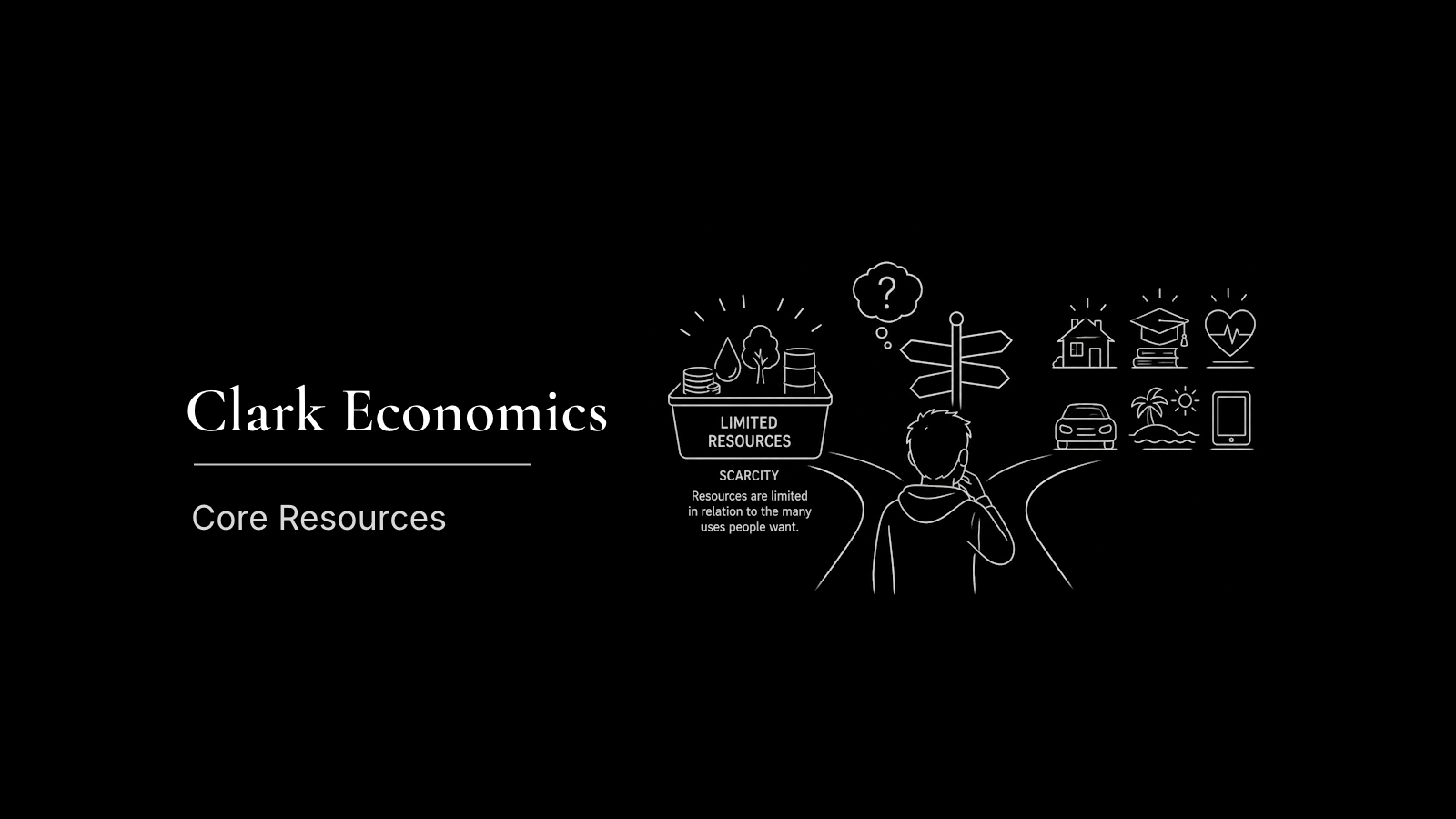
Scarcity is one of the first and most important ideas in Economics. Discover what economists really mean by scarcity, why limited resources force individuals, businesses and governments to make choices, and how this leads to opportunity cost.
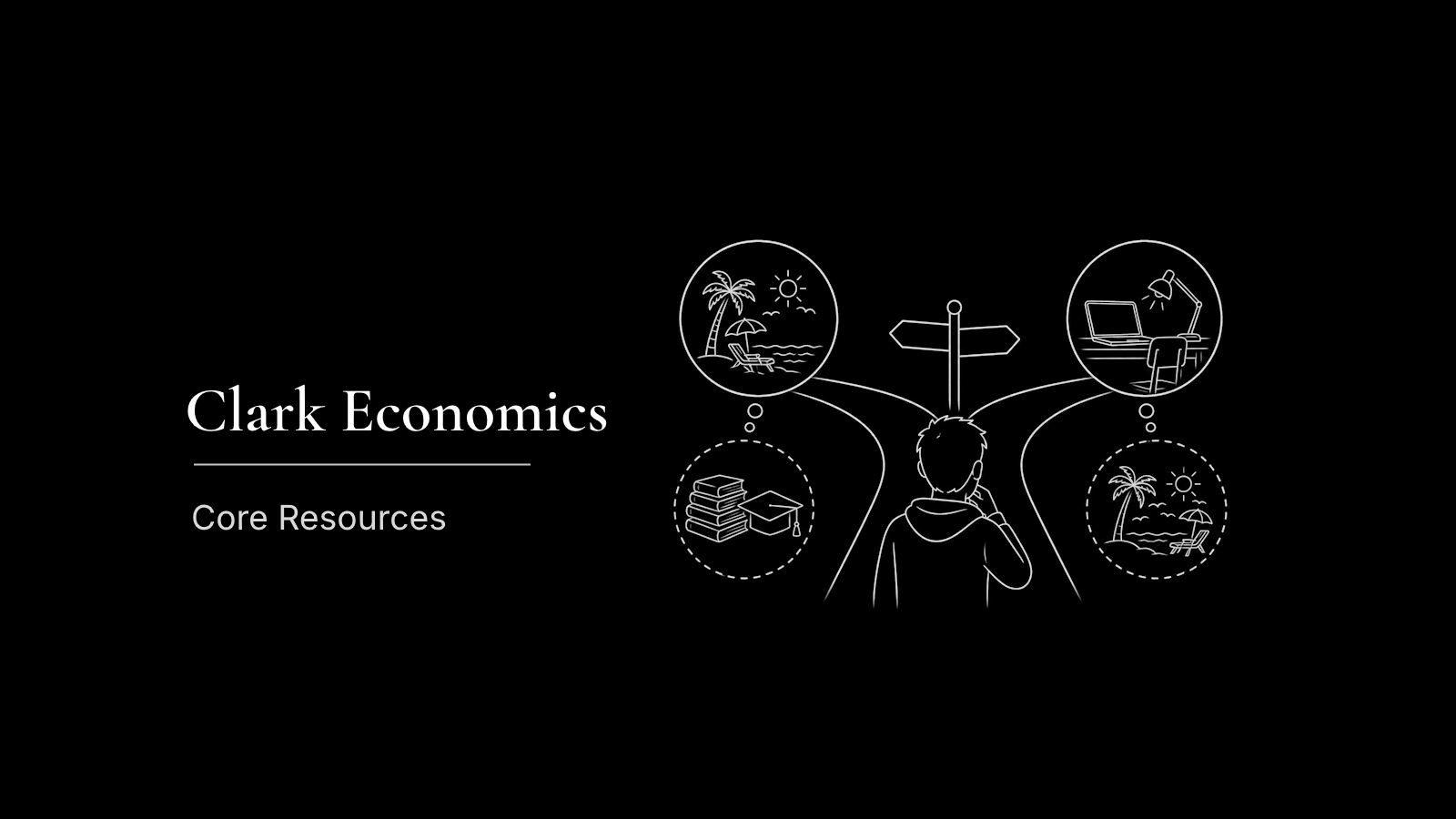
Every choice means giving something else up. Economists call the value of the next best alternative opportunity cost. This article explains how opportunity cost affects everyday spending, business investment and government decisions—and why the true cost of a choice is not always its price.
Economics is much more than money, banks and the stock market. Discover why economists study choices, scarcity and opportunity cost, and how these ideas help explain the world around us.
A-Level Economics Skills
These guides focus on the skills that turn economic knowledge into strong exam answers. Learn how to build chains of analysis, evaluate arguments, use diagrams and apply context — by understanding how the Economics fits together, rather than simply memorising model answers.
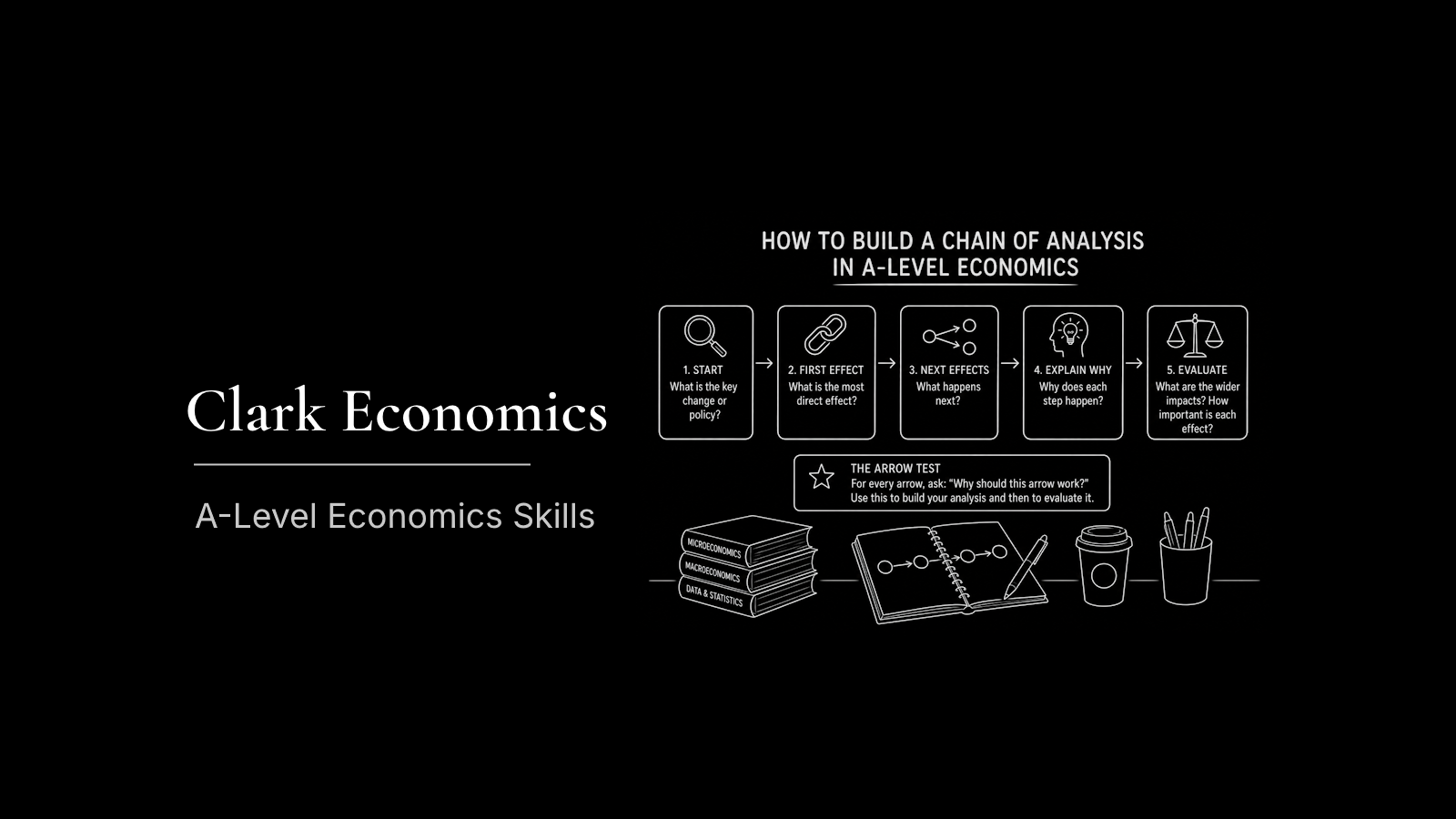
Strong economic analysis is not about memorising long chains or model paragraphs. It is about understanding why one economic change leads to another. This guide shows you how to build chains of reasoning using the Clark Economics Arrow Test, spot missing or faulty links, develop evaluation naturally and turn your understanding into concise exam answers.
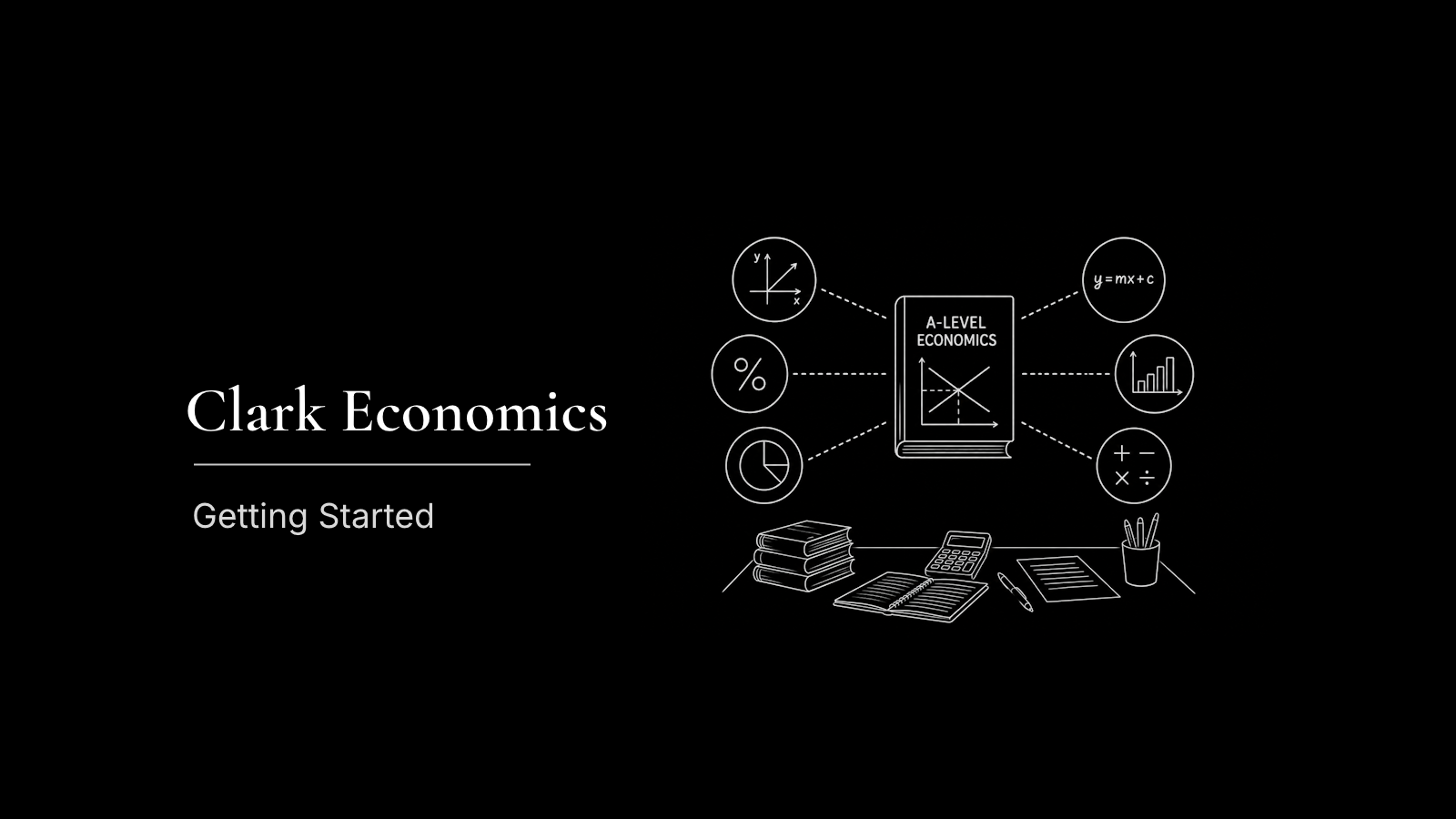
What maths do you actually need for A-Level Economics? This guide explains the main types of maths you will use, including percentages, averages, index numbers, real and nominal values, elasticity and economic data.