Economics Explained
Clear explanations of current economic events, written for A-level students studying AQA or Edexcel Economics. Each article shows how real-world examples can be used to understand economic theory, strengthen analysis and improve evaluation.

Subsidies in A-Level Economics Exams: Analysis and Evaluation
Can you apply what you've learned about subsidies to an unfamiliar economic problem? Follow Ben, a junior economist assessing a government grant, and discover how to develop stronger analysis, evaluation and reasoned judgements in A-level Economics exams.
Types of Subsidies: How Do They Work in Different Industries?
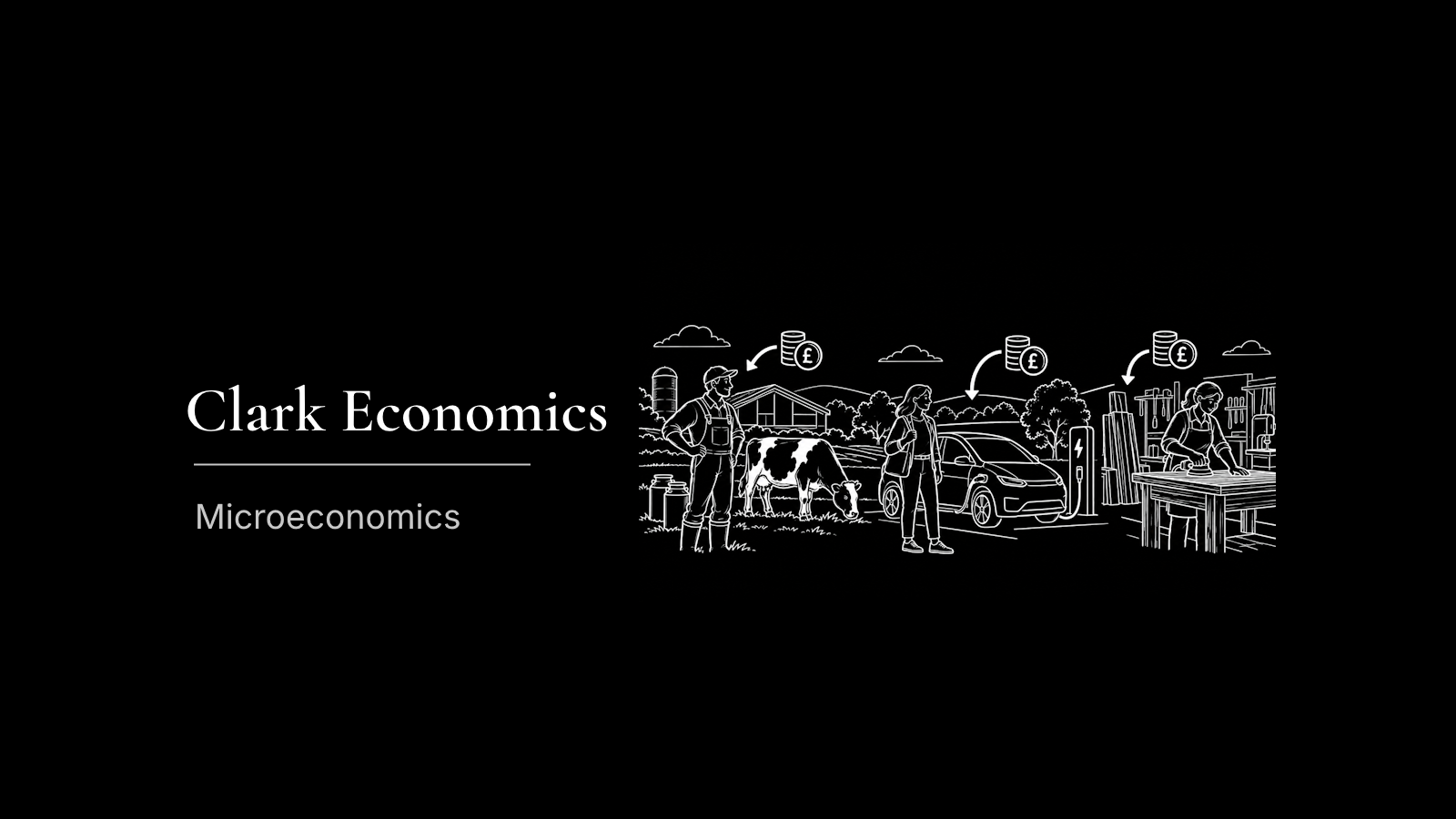
Not all subsidies work in the same way. Using a dairy farmer, an electric-car buyer and a furniture manufacturer, we explore different types of subsidy, how they change incentives, who benefits and why governments introduce them.

Do Subsidies Improve Economic Welfare?
Do subsidies make society better off? Discover why they can create welfare losses, when they may correct market failure and why their effects depend on circumstances.
Who Actually Pays for a Subsidy?
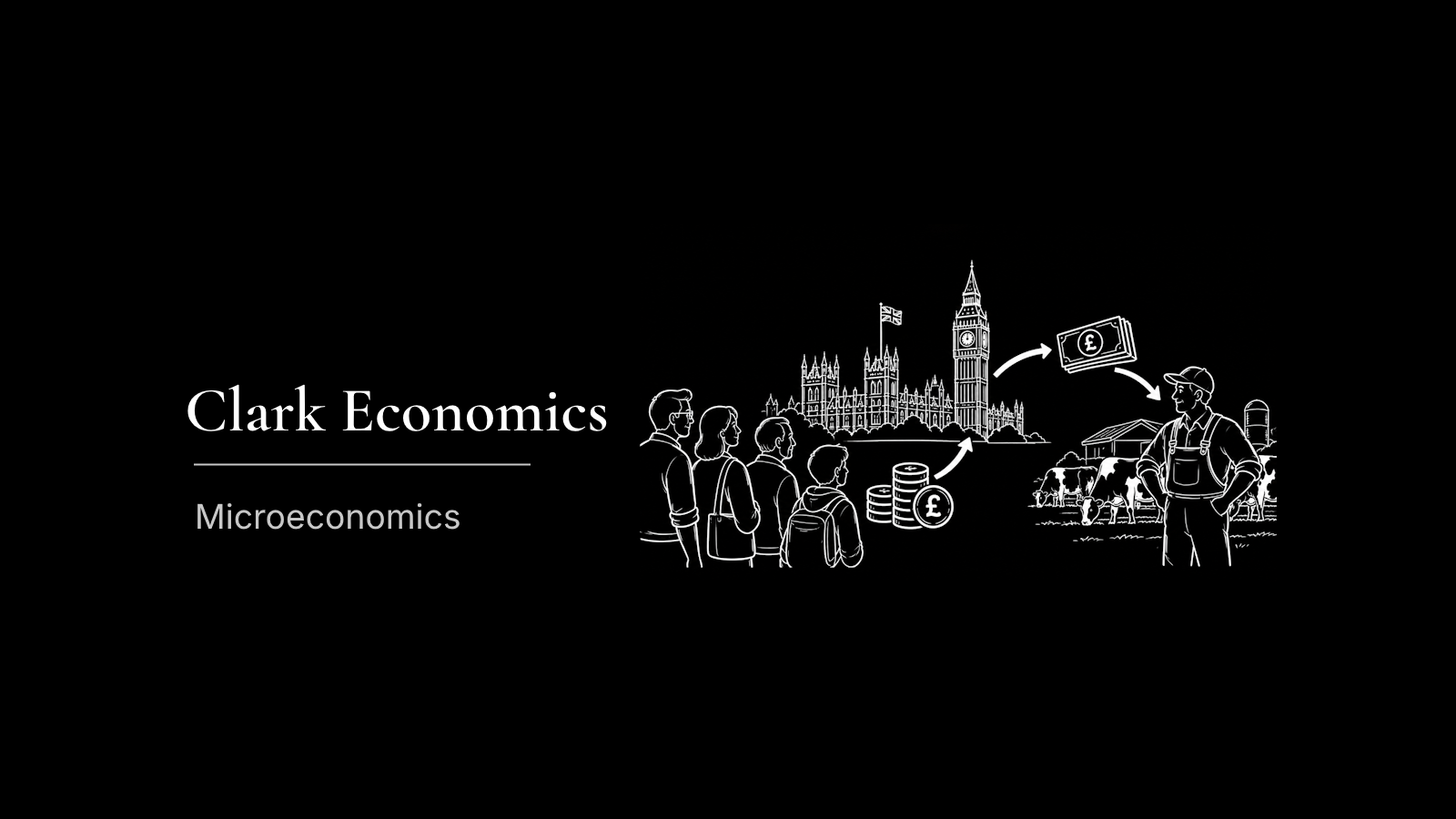
Where does the money for government subsidies come from? Explore taxation, borrowing, opportunity cost and why subsidy spending isn't necessarily a loss to society.

Who Benefits from a Subsidy? The Role of Elasticity
Who really benefits when the government pays a subsidy? Discover how farmers and buyers share the benefits, and why price elasticity matters.
The Subsidy Diagram Explained: Step by Step
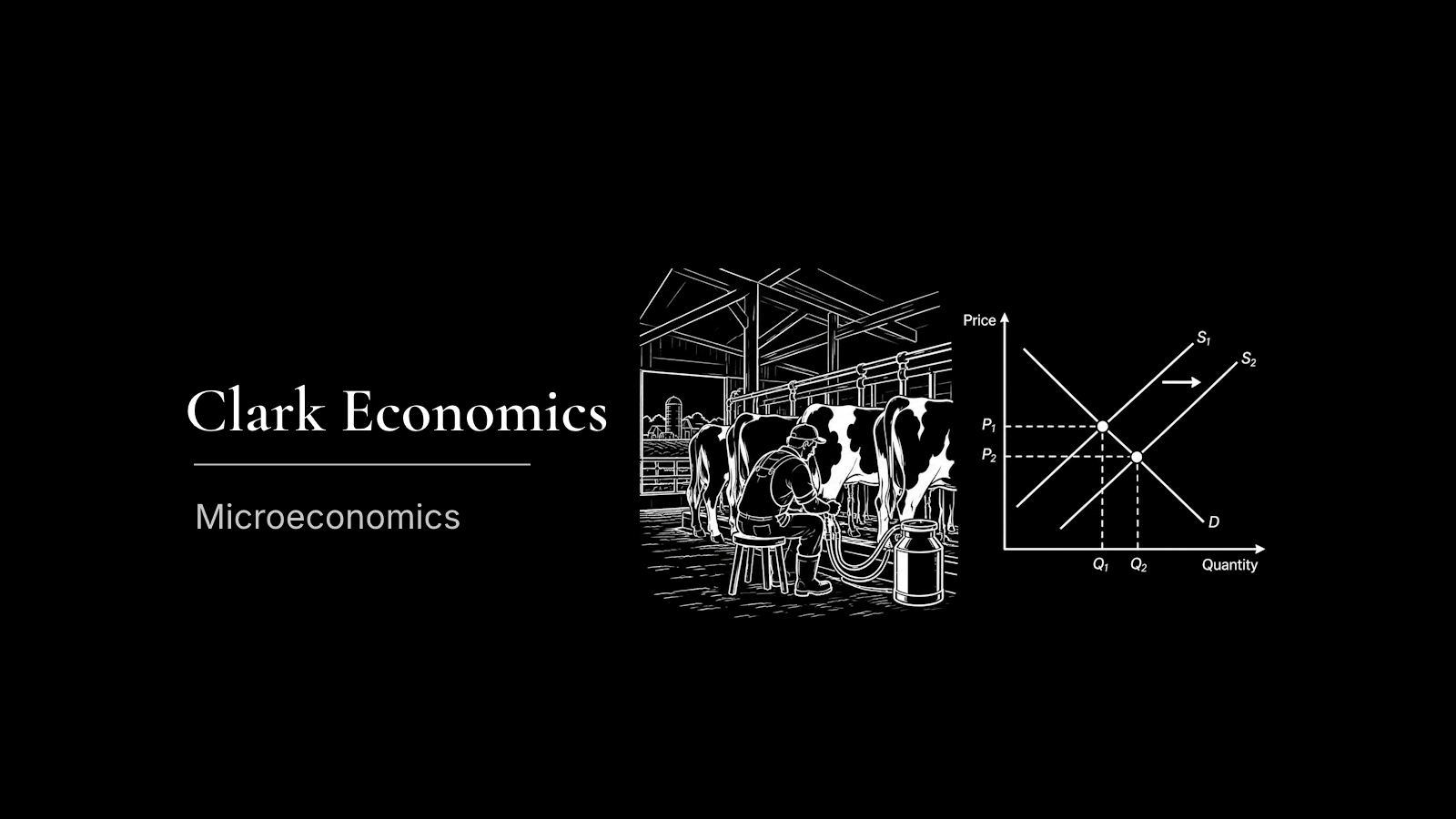
Learn how to draw and understand a subsidy diagram, one step at a time. Using Luke's dairy farm, we explain each line, price and change in quantity.

How Does a Subsidy Actually Work?
Follow Luke, a dairy farmer, to discover how a government subsidy works in practice, why it encourages production and what happens to market prices.

Who Gains and Who Loses from a Tariff? Consumer Surplus, Producer Surplus and Welfare
See who gains and who loses from a tariff, and how consumer surplus, producer surplus, government revenue and deadweight welfare loss are shown on the tariff diagram.

How Does a Tariff Work? The Tariff Diagram Explained
Learn how a tariff changes the standard world-price diagram by raising the domestic price, increasing domestic production, reducing consumption and cutting imports.

World Price and Imports Explained: The Economics Before a Tariff
Understand what economists mean by the world price, why imports arise, and how domestic demand and supply create the import gap before a tariff is introduced.

Who Actually Pays a Tariff? Where the Money Goes and Who Bears the Cost
Who actually pays a tariff, where does the money go, and does the price automatically rise? A simple example using imported tomatoes shows how tariffs work in practice — and why the person who pays the tariff is not necessarily the person who ultimately bears its cost.

How to Build a Chain of Analysis in A-Level Economics
Learn how to build clear chains of reasoning using the Clark Economics Arrow Test, spot missing or faulty links, and turn your economic understanding into concise exam answers.

How to Use Context Properly in A-Level Economics
Learn how to use context properly in A-Level economics by showing how facts, data and real-world examples should change your analysis, evaluation and judgement — not just decorate your answer.

How to Evaluate in A-Level Economics
Evaluation is not simply adding “however” or mentioning elasticity, magnitude or time lags. Learn how to test an economic argument, identify what really matters, and develop stronger evaluation using the Clark Economics Arrow Test.

How to Reach a Judgement in A-Level Economics
Learn how to reach a strong judgement in A-Level Economics by weighing arguments rather than simply listing points for and against. This guide shows how analysis, evaluation, evidence and context should shape your final conclusion.

How to Use the Short Run and Long Run in A-Level Economics
Learn how to use the short run and long run properly in A-Level economics by explaining what has time to adjust — and how that changes analysis, evaluation and judgement.

What Subjects Go Well With A-Level Economics?
Which A-Levels work well with Economics? Explore different subject combinations and find out why Maths matters for some university degrees.

Economics or Business A-Level: Which Should You Choose?
Not sure whether to choose Economics or Business? Discover how the subjects differ and which might suit your interests.

What Maths Do You Actually Need for A-Level Economics?
Explore the maths used in A-Level Economics, with worked examples covering percentages, index numbers, profit, elasticity and economic data.

Should My Child Study A-Level Economics? A Guide for Parents
A guide for parents explaining what A-Level Economics involves, which students might enjoy it and how to help them choose.